How should the text be organised?
There are various ways of organising ideas and information. Your text might have a focus on comparison and contrast, for instance, or on cause and effect, or you may aim to classify something. The way you structure your text depends on the aim of the paper and on conventions in your discipline.
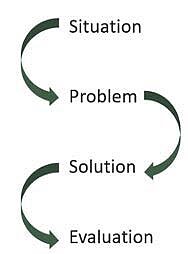
One way of thinking about text structure is to consider what happens in the text. Linguists talk about the steps that writers take in order to signal their argument and results as rhetorical moves. A well known framework for this is SPSE (Situation, Problem, Solution, Evaluation). To provide a background and foundation for the argument that is presented in the text, academic essays and articles often start by mapping out the field or situation. By then highlighting a certain problem, the writer identifies a gap in knowledge or point out that something has not been investigated sufficiently or solved in an acceptable way. From there, the text often moves on to identify a solution of the stated problem, and the solution will then be evaluated and discussed.
As a student is is important that you consider not only what kind of essay or paper you are expected to produce, but also that the text may need to follow certain guidelines regarding structure. Different disciplines have different conventions, and students' writing is assessed based on the requirements of the discipline and of the particular course.
Below, we highlight general aspects to consider together with links to other parts of the AWELU platform where more in-depth information is provided.
Overall text structure
The overall structure of a text is sometimes referred to as its global structure or macro structure. The way a text is structured - what building blocks it consists of and in what order they are placed - to a large extent has to do with disciplinary conventions. In some disciplines, the so-called IMRaD structure is used, whereas other fields prefer a three-part essay structure.
Read about these two macro formats here:
Which structure you should use has to do with your discipline and what kind of investigation or discussion you are is expected to present. If instructions you have received do not clarify which kind of structure to rely on, ask your teacher.
Structuring sections of the text
Much writing is divided into sections; essays and articles start with an Introduction, which, depending on the macro structure, might be followed by a Methods section, or a theoretical background section, for instance, before results are presented and discussed. Often the essay text ends with a Conclusion (followed by a list of references). Depending on the overall format of the text, these sections may look different. However, there are some general features and formats that apply in most fields and that help writers structure the different sections of their work:
Structuring paragraphs
Paragraphs are small units of text that focus on one issue or one argument. Depending on the kind of text you write, a paragraph is usually 3-10 sentences long. Read about what to consider when framing paragraphs here:
Further reading
Read more about text structure in the AWELU Writing section: